
Section 01Why June–July Is India's Most Critical Refractory Maintenance Window
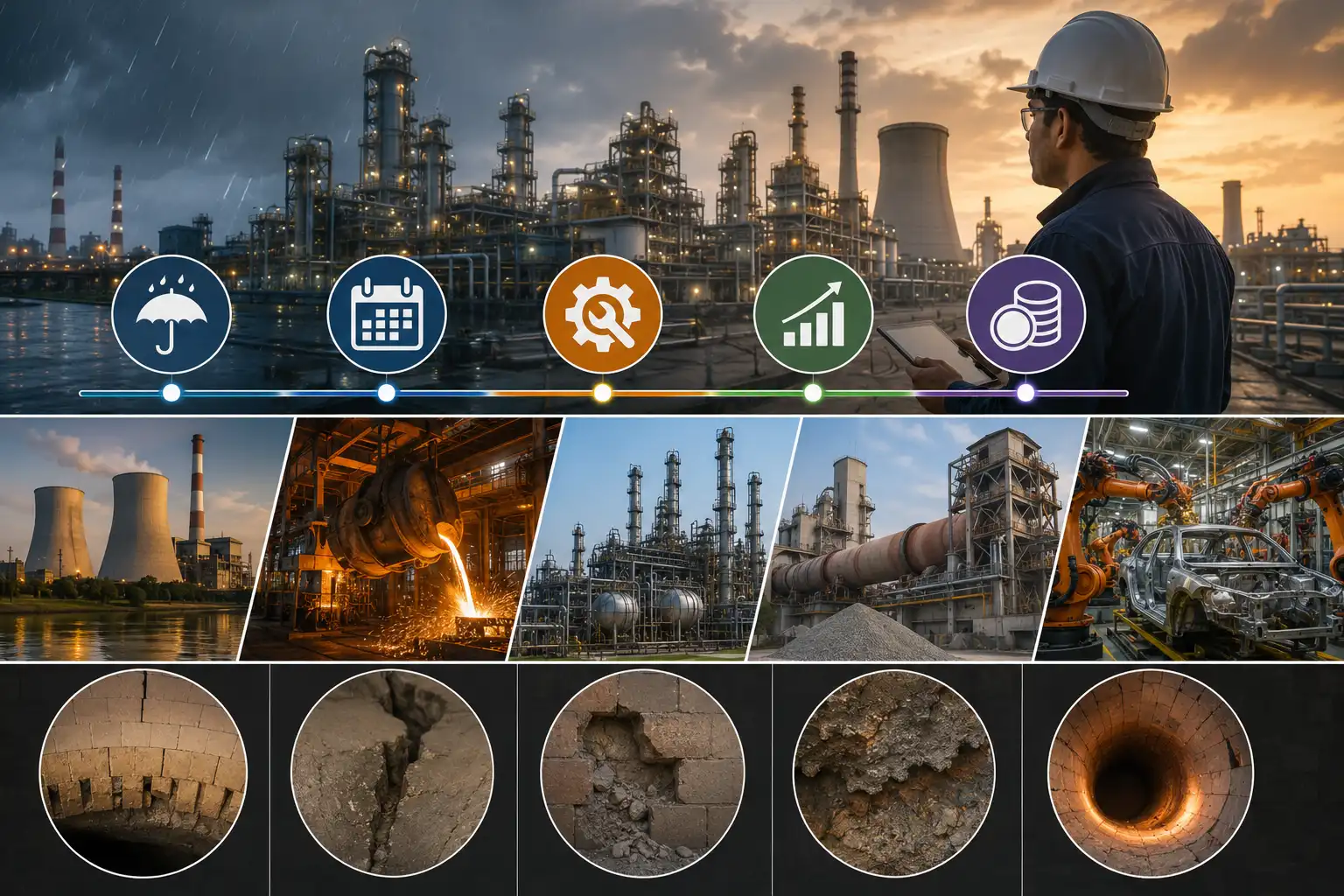
India's industrial calendar has a rhythm. From August to May, heavy industries run at full tilt — power grids strain under summer and winter demand, steel mills feed the construction boom, foundries cast components for the auto sector, and cement kilns fire continuously. But when the monsoon arrives in June, demand softens, logistics slow, and plant managers across the country face the same reality: this is the only window to fix what's been wearing out all year.
For refractory-dependent industries, the June–July shutdown season is not optional. Furnace linings, kiln bricks, boiler combustion chambers, and reactor linings all degrade continuously under operating temperatures between 900°C and 1700°C. Some zones will have worn to critical thickness. Others will have cracked, spalled, or suffered slag penetration. A shutdown that skips refractory maintenance is borrowing time — and the interest is paid as emergency breakdowns during peak production months.
Section 02Thermal Power Plants — Boiler & Combustion Chamber Refractory
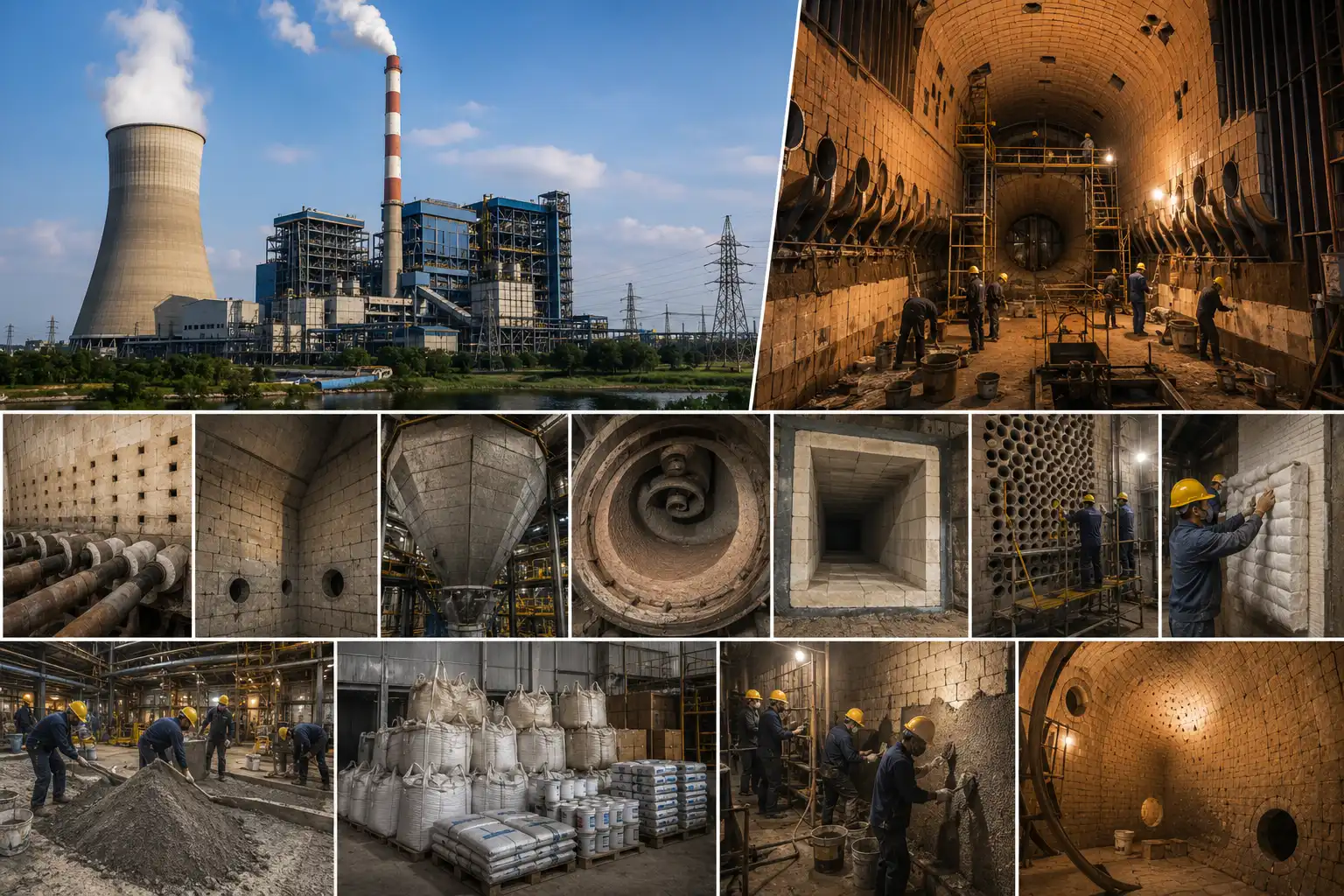
Thermal Power Plants
Thermal power plants operate their boilers at continuous high temperatures, exposing combustion chambers, burner zones, ash hoppers, and flue gas ducts to intense thermal stress and chemical attack from fly ash and slag. The June–July low-demand window is when planned annual overhauls happen — and refractory is at the heart of every boiler overhaul.
Critical refractory zones in thermal power plant shutdowns
- Combustion chamber wall lining — castable replacement in eroded zones
- Burner block replacement — refractory burner tile and quarl replacement
- Ash hopper and economiser refractory — anti-abrasion castable lining
- Cyclone separator refractory — high-wear castable in CFBC boilers
- Flue gas duct and ESP inlet lining — thermal castable replacement
- Air preheater ceramic packing and sealing refractory
- Insulation lagging and ceramic fibre module replacement on boiler walls
Section 03Captive Power Plants — Shutdown Refractory Services
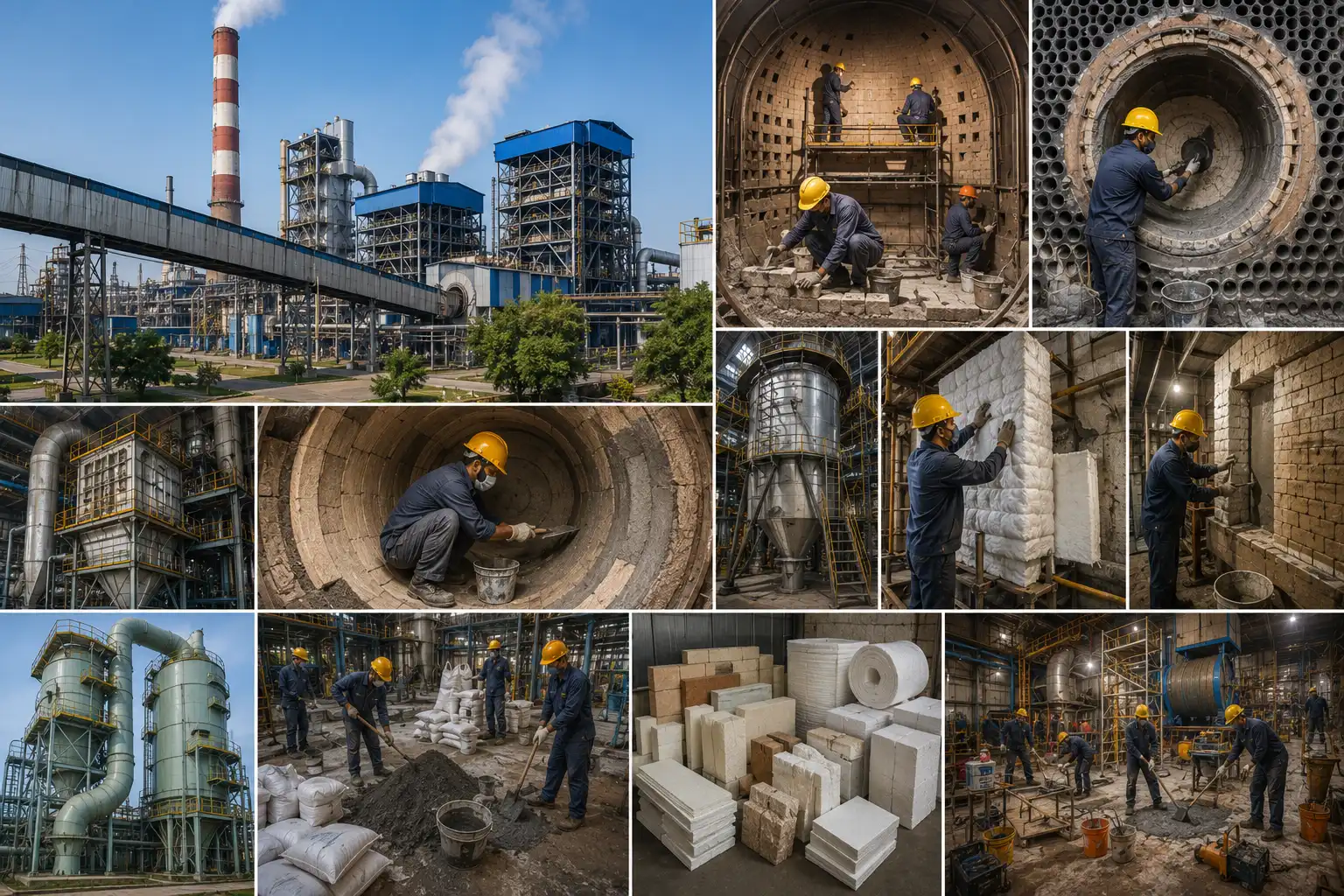
Captive Power Plants
Captive power plants attached to steel mills, cement plants, paper mills, and textile units shut down in sync with the parent plant. This creates a compressed window where both the main plant's furnaces and the CPP boiler must be overhauled simultaneously — placing high demands on refractory contractors to work on multiple units in parallel.
Refractory maintenance scope for CPPs
- AFBC/CFBC boiler combustion chamber castable relining
- Boiler drum and steam drum refractory repair
- Waste heat recovery boiler (WHRB) refractory — cement & sponge iron CPPs
- Biomass gasifier refractory lining maintenance
- Boiler insulation — ceramic fibre blanket and board replacement
- Flue gas desulfurisation (FGD) unit refractory lining
Section 04Steel Plants, Foundries & Casting Units
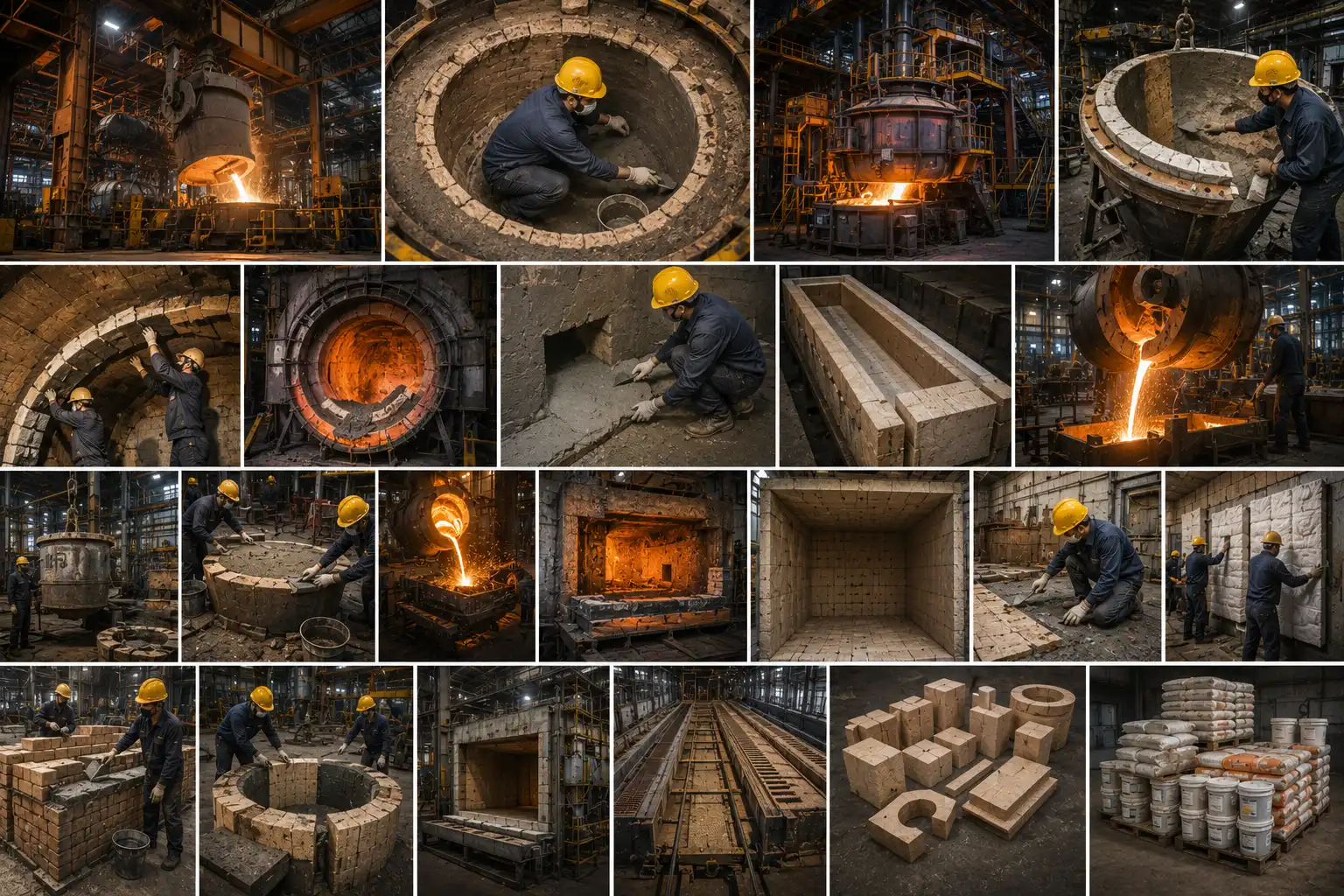
Steel Plants, Foundries & Casting Units
Steel and foundry operations place the most intensive demands on refractory of any industry. Induction furnaces cycle through hundreds of heats; electric arc furnaces run at over 1600°C; ladles carry molten metal for casting. By June, most induction furnace linings in Indian foundries will be approaching or past their optimal replacement point. The shutdown season is when the full lining programme — not just patching — should be executed.
Steel plant shutdown refractory scope
- Coreless induction furnace complete relining — dry vibration mix or rammable
- Electric arc furnace sidewall and roof refractory replacement
- Steel ladle lining — alumina-spinel castable relining
- Tundish lining replacement — monolithic or board lining
- Torpedo ladle and transfer ladle refractory
- Reheating furnace roof and skid rail refractory
- Walking beam furnace refractory overhaul
Foundry & casting unit shutdown refractory scope
- Cupola furnace complete reline — fireclay and high-alumina brickwork
- Induction furnace spout and pouring lip castable replacement
- Runner box and launder refractory repair
- Heat treatment furnace ceramic fibre module replacement
- Annealing furnace lining overhaul
- Shot blast and fettling area refractory repair
Section 05Sponge Iron & Pellet Plants — Rotary Kiln Refractory Maintenance
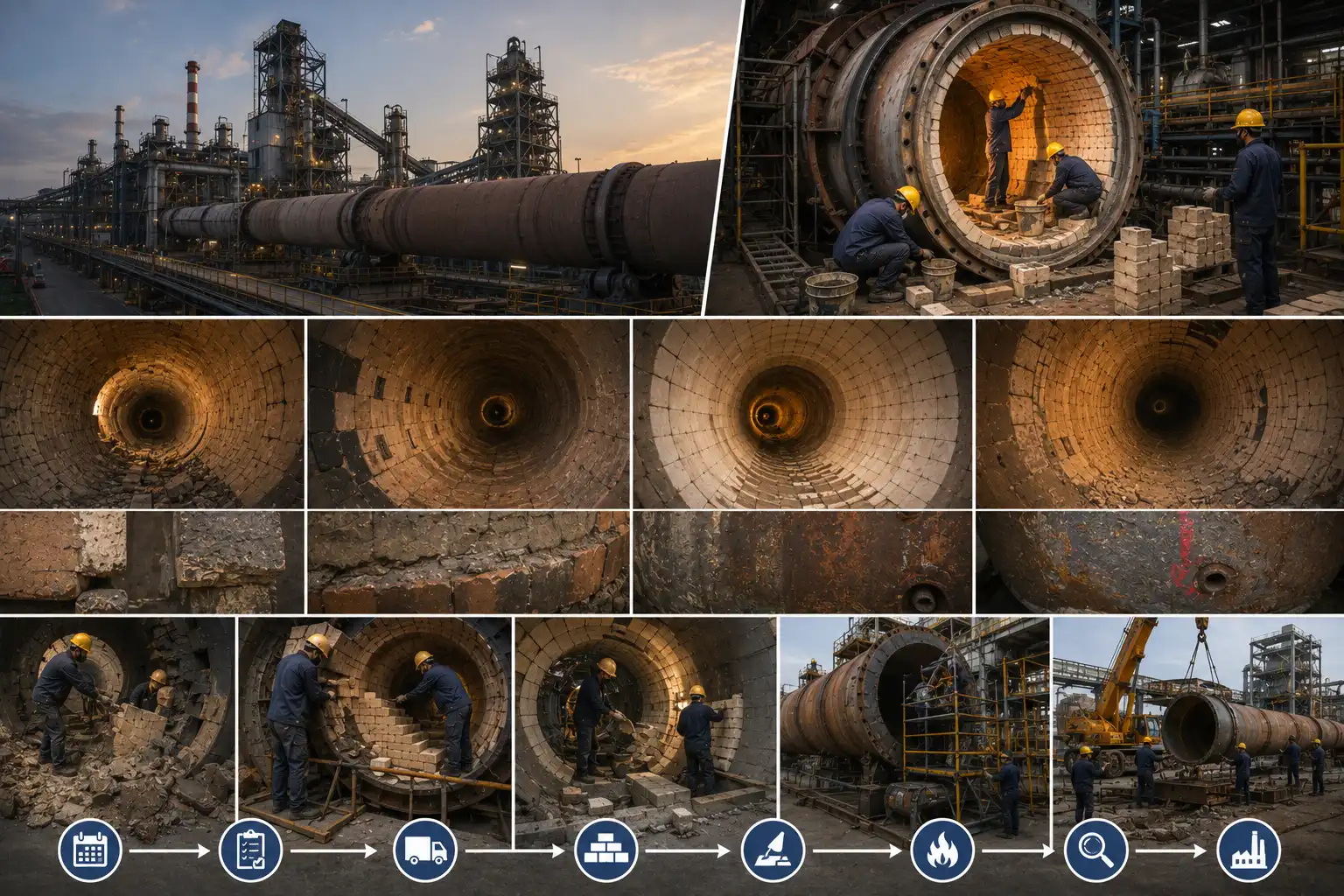
Sponge Iron & Pellet Plants
Rotary kilns in sponge iron plants are among the most refractory-demanding equipment in Indian industry. A typical 100 TPD DRI kiln is 50–75 metres long and lined throughout with high-alumina bricks that must withstand not only temperature but abrasion from the rotating iron ore and coal charge, plus thermal cycling from startup and shutdown cycles. The June–July window is the primary annual relining window for most sponge iron producers.
| Kiln Zone | Refractory Type | Replacement Frequency | Critical Issue |
|---|---|---|---|
| Discharge end | High-alumina bricks (70% Al₂O₃) | Every shutdown | Highest abrasion + thermal shock |
| Reduction zone | High-alumina bricks (60% Al₂O₃) | Annual | Reducing atmosphere attack |
| Pre-heating zone | Fireclay bricks / Insulating bricks | 1–2 years | Thermal gradient stress |
| Feed end | Castable / fireclay bricks | Annual | Ore impact + moisture |
| Kiln shell | Shell coating / refractory paint | Annual inspection | Red spot detection |
Section 06Cement Plants — Rotary Kiln & Preheater Refractory Shutdown
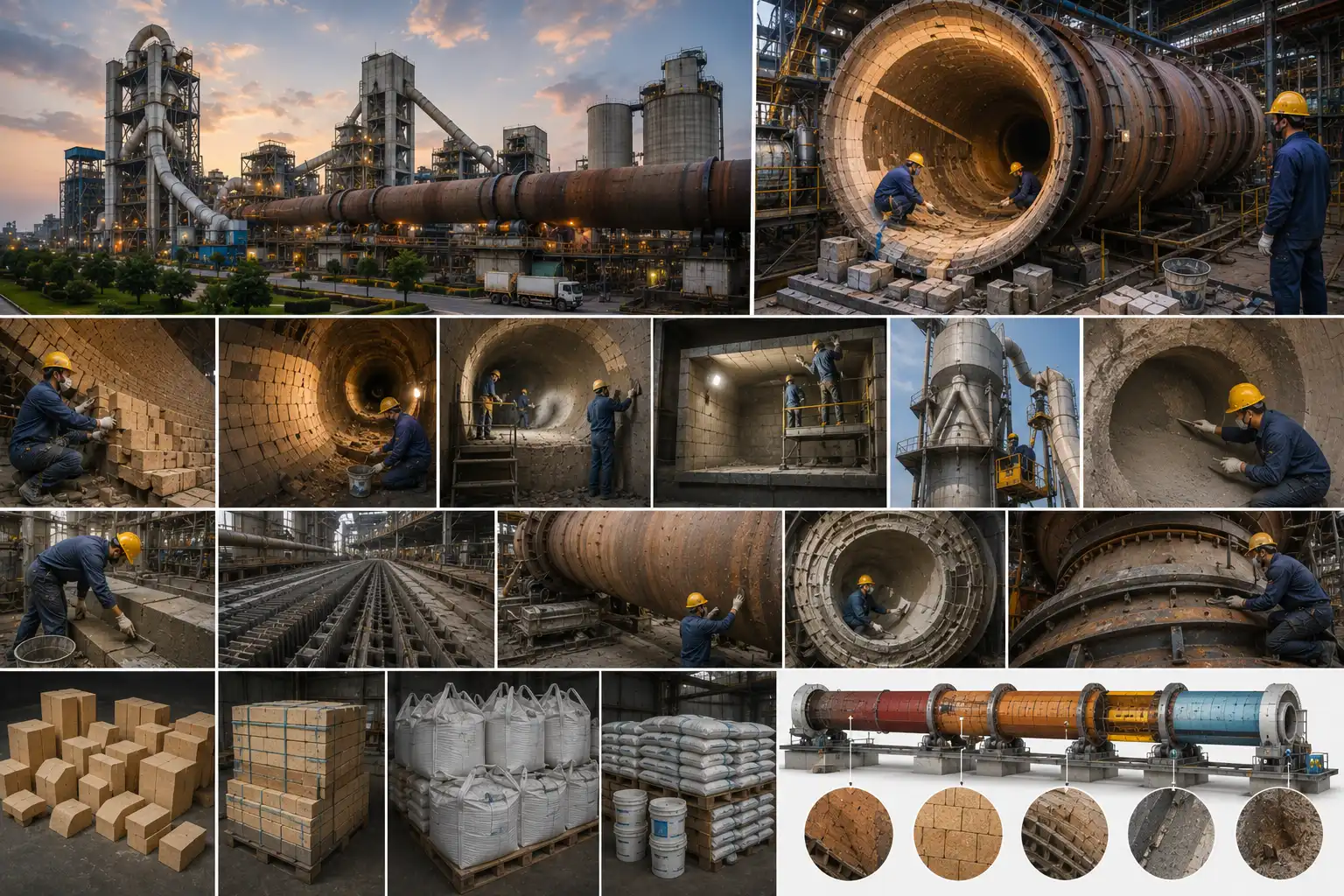
Cement Plants
Cement kilns are among the largest refractory-lined vessels in Indian industry. A typical 3000 TPD kiln consumes 5–15 tonnes of refractory bricks per year in spot repairs alone, and requires a full shutdown relining every 12–24 months depending on the clinker chemistry and operating temperature. The June–July monsoon slowdown — when cement demand from construction dips — is the standard annual shutdown window for most Indian cement producers.
Cement plant shutdown refractory scope
- Rotary kiln complete or partial brick relining — magnesia-spinel, dolomite, and high-alumina zones
- Burning zone refractory — basic brick replacement (most critical zone)
- Preheater cyclone castable lining replacement
- Calciner refractory — high-alumina castable in combustion and mixing zones
- Clinker cooler grate and side wall castable replacement
- Coal mill and raw mill lining repair
- Kiln nose ring refractory — castable and brick combination
- Tyre and roller contact zone shell inspection and coating
Section 07Chemical & Fertilizer Plants — Reactor & Furnace Refractory
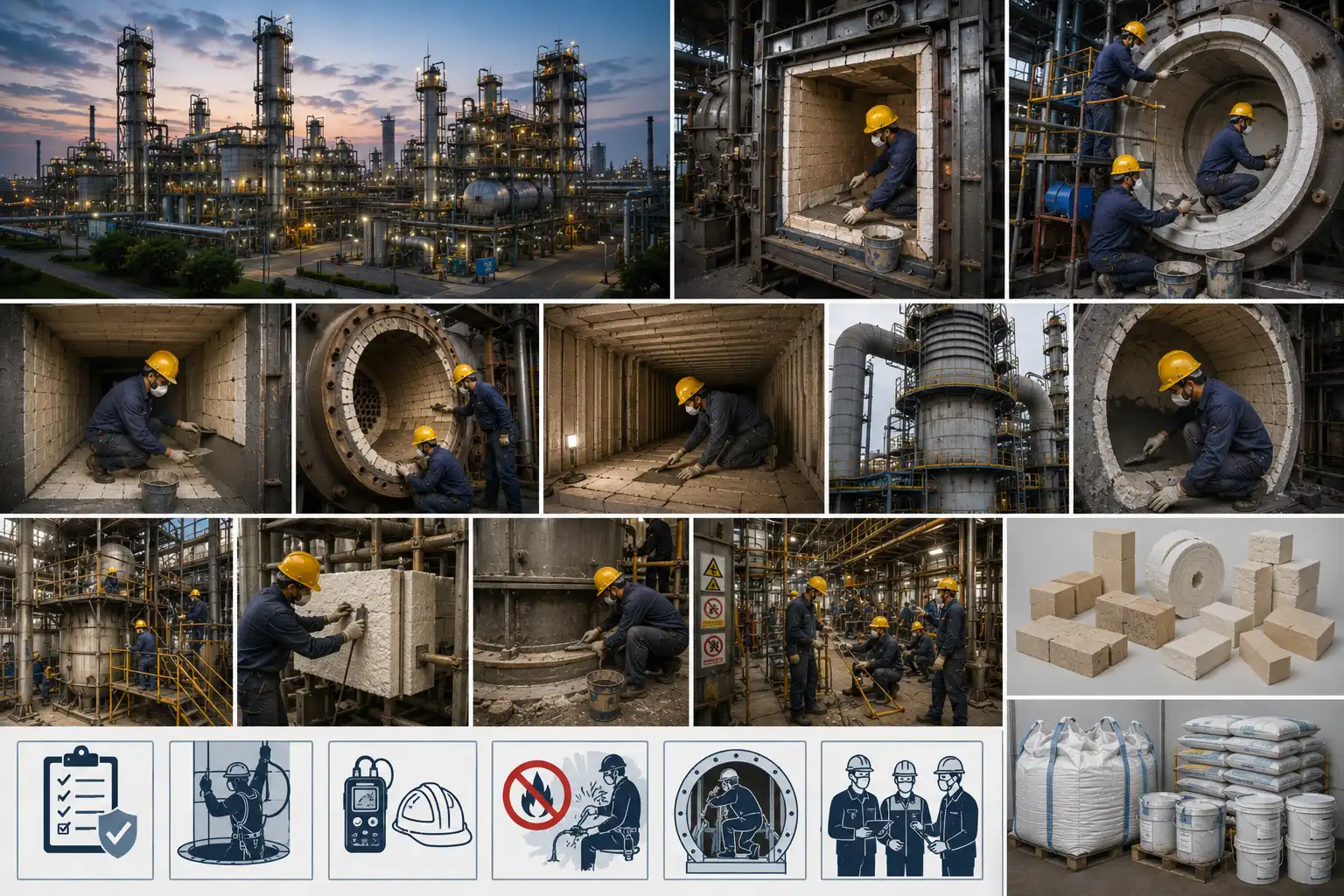
Chemical & Fertilizer Plants
Chemical and fertilizer plants operate complex high-temperature reactors, reformer furnaces, and process heaters that rely on precision refractory linings to maintain temperature uniformity, contain hazardous process gases, and withstand aggressive chemical attack. Unlike steel or cement kilns, chemical plant refractory failures carry not just production risk but serious safety consequences — making planned shutdown maintenance non-negotiable.
Chemical plant shutdown refractory scope
- Ammonia reformer furnace refractory — ceramic fibre and castable combination linings
- Sulphuric acid converter refractory — acid-resistant castable and brick
- Synthesis gas reformer tube support and arch refractory
- Process heater firebox lining — ceramic fibre module replacement
- Fluidised bed reactor refractory — erosion-resistant castable
- Incinerator and waste heat boiler refractory
- Expansion joint and penetration sealing refractory — critical for gas containment
Section 08How to Plan Your Shutdown Refractory Work: A Step-by-Step Guide
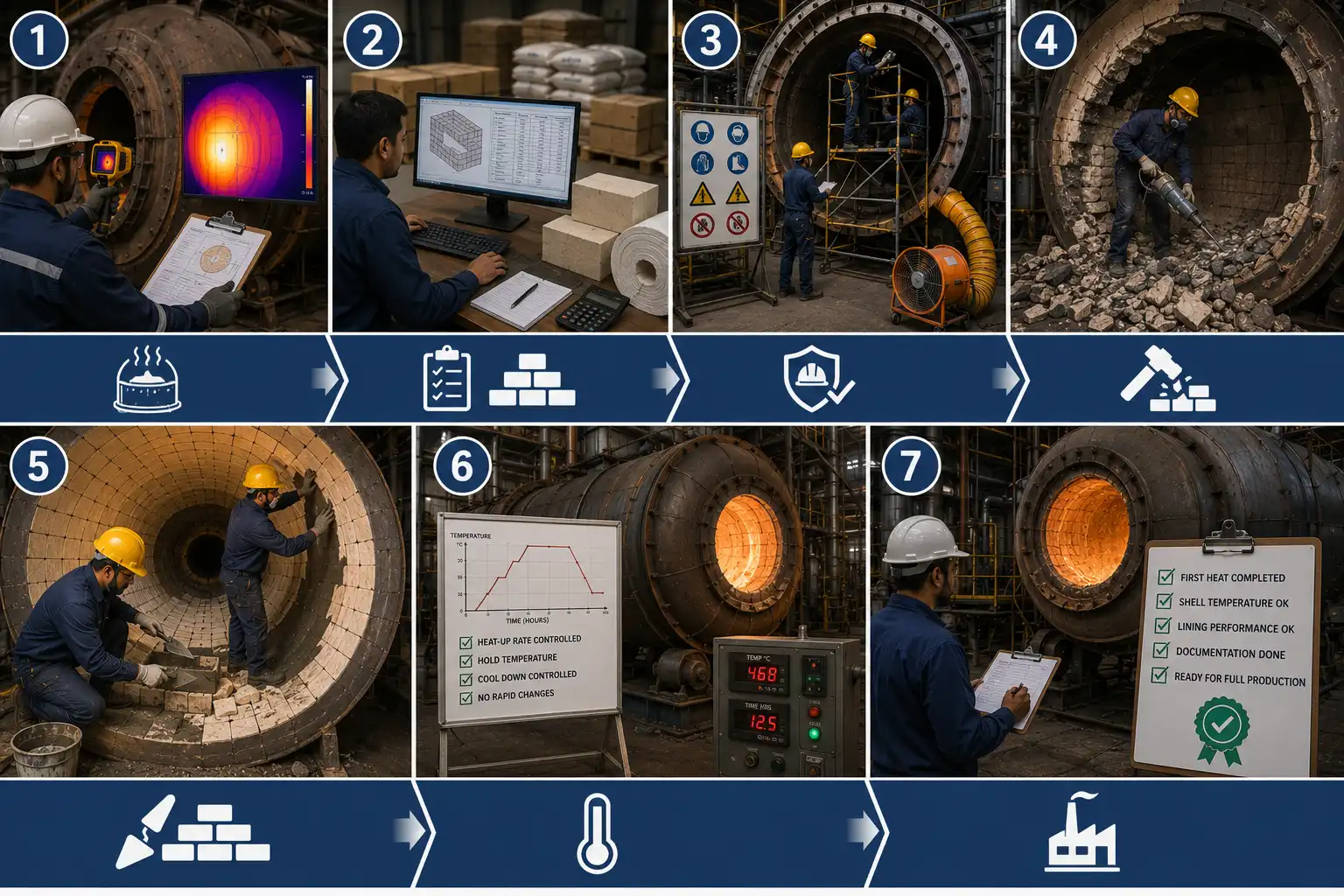
A refractory shutdown that runs over schedule costs lakhs per day in lost production. The difference between a well-executed shutdown and a chaotic one is almost entirely in the planning done before the furnace goes cold. Here is the framework MMP Refratech uses for every shutdown project.
Pre-shutdown thermal audit (4–6 weeks before)
Infrared thermography of furnace shell to identify hotspots, measure lining thickness loss, and define exact zones requiring full replacement vs patching. This drives the material take-off and avoids over- or under-ordering.
Scope definition and material ordering (3–4 weeks before)
Based on the audit, prepare detailed scope of work by zone, material take-off, and issue purchase orders. Pre-position materials at site to avoid delivery delays during the shutdown window itself.
Scaffold, access, and safety preparation (1–2 weeks before)
Erect scaffolding inside the furnace shell, set up ventilation for confined space work, obtain all necessary hot work and entry permits, and brief the installation crew on site-specific safety requirements.
Demolition of worn lining
Remove old refractory systematically — typically requires 1–3 days for a medium induction furnace. Inspect the steel shell for hot spots, deformation, and corrosion before new lining begins.
New lining installation
Install new refractory to engineered specifications — castable vibration, brick laying, or rammable application depending on the zone. Quality control checks at each layer. Allow ambient cure time as specified.
Controlled heat-up and dry-out
Follow the engineered heat-up schedule for the specific material installed. This is the most critical step — rushed heat-up destroys new linings. MMP Refratech provides on-site heat-up supervision for every major lining job.
First commissioning run and handover
Run the first heat at reduced capacity under supervision. Monitor shell temperature. Confirm lining performance before returning to full production. Issue as-built documentation and maintenance record.
Section 09Regional Coverage — Local to Pan-India
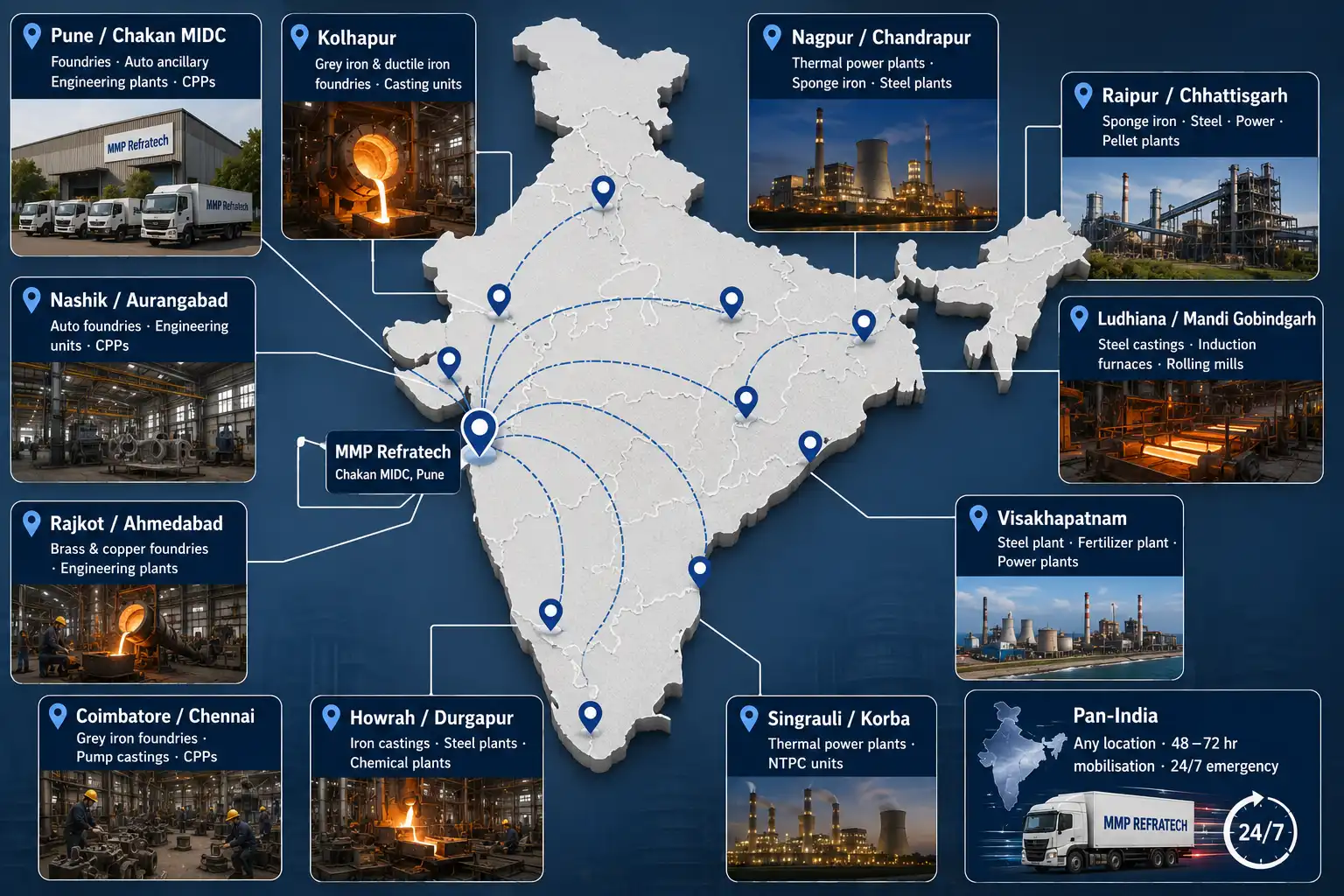
MMP Refratech deploys mobile shutdown teams across India's major industrial clusters. Headquartered at Chakan MIDC, Pune, we have the logistics, material inventory, and skilled manpower to mobilise for shutdowns anywhere in India within 48–72 hours.
Section 10Frequently Asked Questions — Shutdown Refractory Maintenance
The Shutdown Window Is Open Now
MMP Refratech teams are available across Maharashtra and pan-India for thermal audits, furnace relining, boiler refractory repair, kiln maintenance, and emergency shutdown support — for all 6 industries shutting down this season.